
Built for the Commons
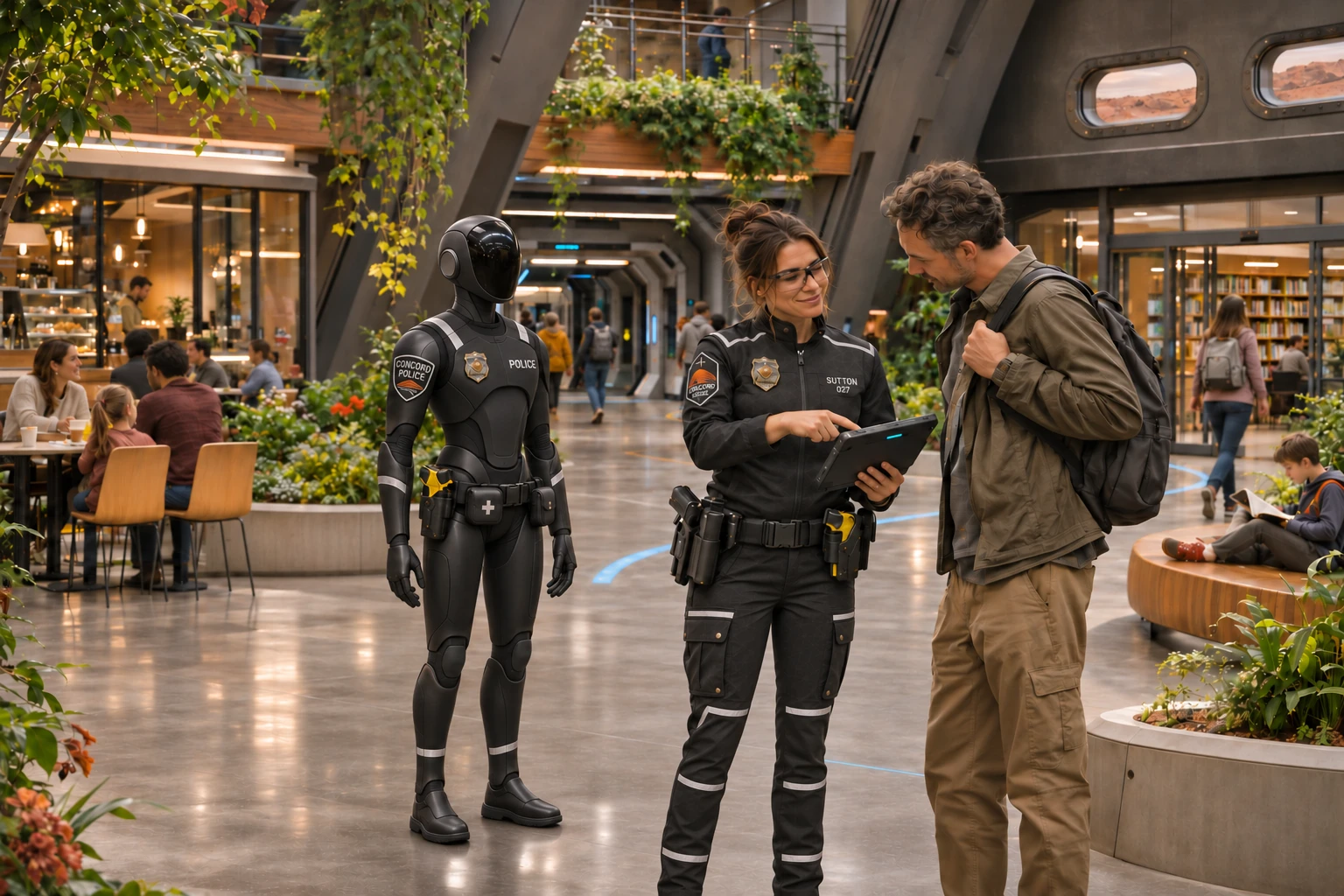
The indoor public-safety humanoid belongs among people walking to a café, visiting the library or asking for directions. Its slim form, rounded surfaces and clear identification suit those shared spaces. The rugged PATROL 04 rover remains a separate unarmed inspection and assistance machine.
A human marshal accompanies and supervises the humanoid. Detention and force decisions remain the human’s responsibility. The machine supports a lawful, directed response within the town’s civilian public-safety system.
Recognizable at a glance
Satin black panels and restrained silver reflectors distinguish the police role from the lighter service family. A Concord Police mark sits on the wearer’s right upper arm, with a shield badge on the right chest. Reflective POLICE identification makes the assignment clear. It carries no human surname or military rank.
The robot’s closed duty equipment includes one holstered conducted-energy device, a case for detention cuffs and a separate first-aid pouch. It carries no firearm. The detention equipment and aid supplies have different purposes; access to either remains part of the supervised assignment.
Authority stays accountable
Public-safety assistance does not give the machine universal access to homes, medical records or technical controls. Qualified people retain responsibility for their own systems. A clinician directs care; an engineer controls a repair; a flight crew controls a vehicle operation.
The same distinction applies during an incident. The accompanying human remains responsible for the decision, the record and the handoff. Clear identification and useful equipment support that responsibility rather than replacing it.